Frankie Reed · 18 November 2026
Server Response Times and Their Correlation with User Scroll Depths in Independent Web Projects
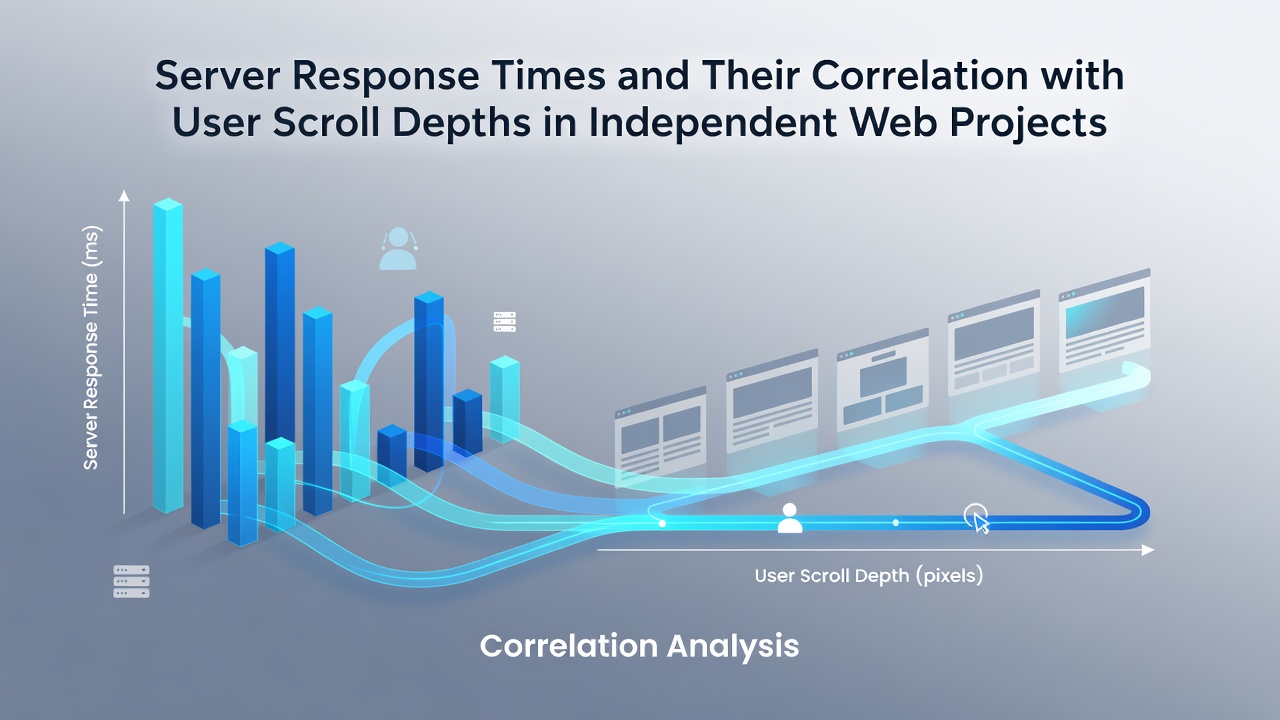
Server response times shape how far visitors scroll on standalone websites, and data from performance monitoring platforms shows measurable patterns across independent projects. Researchers tracking these metrics note that delays in initial server replies often coincide with reduced engagement deeper in page content, while quicker responses align with extended scrolling sessions. Studies compiled through 2025 and into November 2026 continue to highlight this relationship in self-managed digital spaces where resources remain limited compared with larger corporate platforms.
Measurement Approaches in Independent Environments
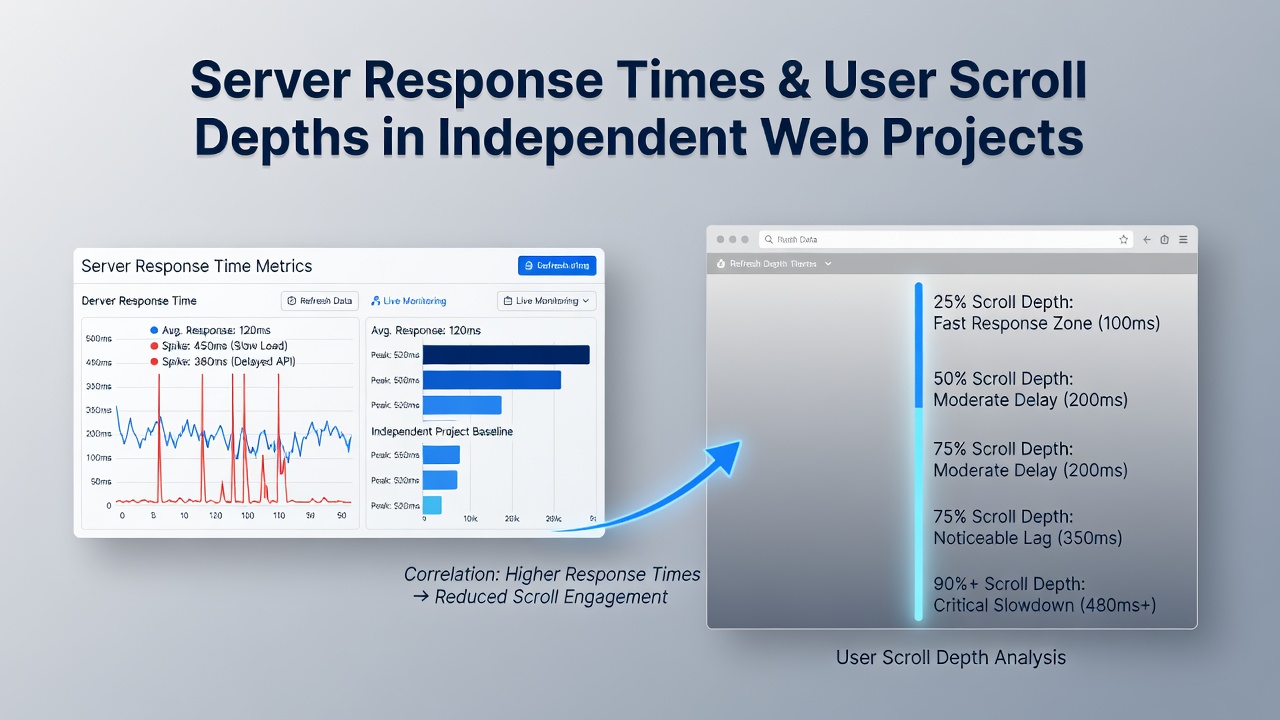
Teams monitoring independent web projects collect server response data through tools that log time-to-first-byte alongside scroll event tracking scripts. These setups capture milliseconds required for a server to reply after a request arrives, then pair that figure with pixel or percentage depth reached by each visitor. Observers note that combining these datasets reveals clusters where responses under 200 milliseconds frequently correspond to scroll depths exceeding 60 percent of page length, whereas latencies above 800 milliseconds tend to cluster around shallower interactions. Multiple projects running on shared hosting report similar trends when they segment traffic by device type and connection speed.
Patterns Observed Across Datasets
Analysis of logs from dozens of standalone sites indicates a consistent inverse relationship between response latency and scroll progression. Faster server replies leave users more likely to continue past initial content blocks, while slower replies prompt earlier exits. One dataset covering sites updated regularly through mid-2026 showed average scroll depth dropping by roughly 12 percentage points for every additional 300 milliseconds of server delay. Researchers who aggregated results across varied content types found the effect held whether pages featured text-heavy articles or image galleries, although the magnitude varied slightly by vertical.
Contributing Technical Factors
Database query optimization, caching layers, and content delivery network proximity all influence server response intervals in these projects. Independent operators who implemented edge caching reported measurable reductions in response times, which in turn correlated with deeper average scroll metrics during subsequent measurement periods. Network conditions at the visitor end also play a role, yet controlled tests isolating server performance still demonstrate the link between backend speed and scroll behavior. Data collected during peak traffic windows in November 2026 reinforced these observations, as sites maintaining sub-300-millisecond responses retained higher scroll continuity even under load.
Comparative Insights from Broader Research
Academic examinations of web performance align with findings from smaller-scale projects. According to reports published by the HTTP Archive, sites achieving strong Core Web Vitals scores, including fast server responses, sustain longer user sessions across diverse traffic sources. HTTP Archive loading performance data further illustrates how time-to-first-byte improvements track with engagement indicators such as scroll completion rates. Parallel work from Australian academic institutions examining regional independent sites produced comparable results, confirming that latency thresholds affect user progression similarly regardless of geographic focus.
Practical Adjustments and Recorded Outcomes
Operators who reduced server response times through configuration tweaks documented subsequent shifts in scroll depth distributions. One project that migrated to a more efficient backend stack recorded a 15 percent increase in average scroll depth within the first month after deployment. Another site that introduced lightweight database indexing observed tighter clustering of visitors reaching the lower third of long-form content. These adjustments did not alter content itself, which isolates the performance variable as the primary driver behind the observed changes in user behavior.
Conclusion
Server response times and user scroll depths maintain a documented correlation in independent web projects, supported by aggregated monitoring data and cross-referenced research through November 2026. Projects that address latency see corresponding movements in engagement depth, while those experiencing slower replies encounter shallower patterns. Continued tracking across varied hosting environments and content formats will likely refine understanding of the precise thresholds where these effects become most pronounced.